

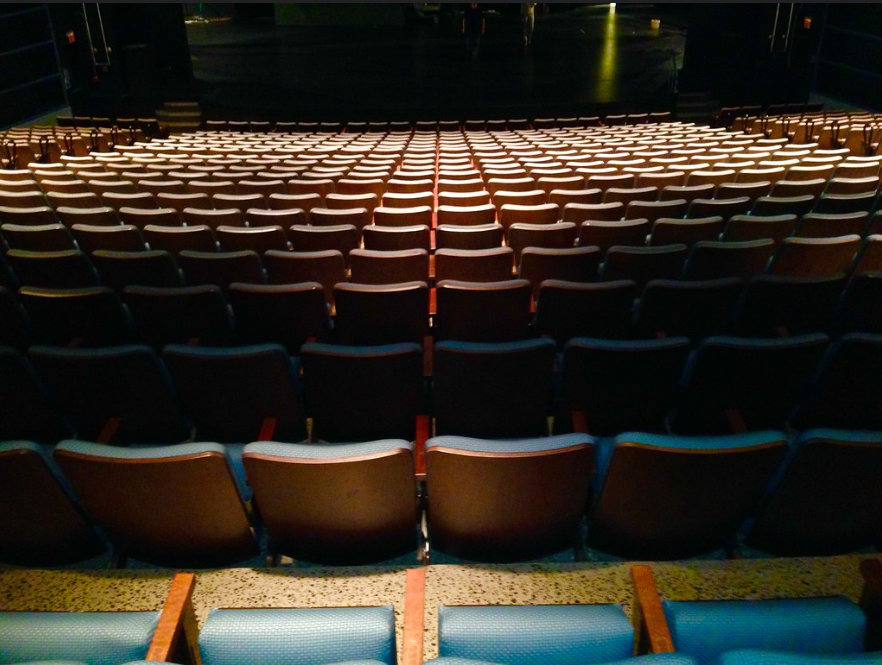
Approximately €3m has been identified for the refurbishment of Limerick’s historic Theatre Royal, as plans progress to restore one of the city’s most iconic cultural landmarks.
THE FUNDING plans were revealed by Limerick Councillor Maria Donoghue following a question she raised at a Metropolitan District meeting this week.
The project, which aims to restore the historic venue on Cecil Street, will be managed by Limerick Twenty Thirty following an agreement with Mayor John Moran.
According to Cllr Donoghue, the refurbishment is currently progressing through feasibility work, investigative surveys and necessary emergency repairs.
“The Mayor has engaged Limerick 2030 to project manage the refurbishment and redevelopment of the Theatre Royal on Cecil Street,” she said.
“They are also procuring an architect-led multidisciplinary design team and planning consultant.”
Approximately €3m has been identified for the refurbishment programme, with a significant allocation coming from this year’s Mayoral Fund.
Further funding applications are expected to be pursued over the coming years as long-term redevelopment progresses.
Donoghue also confirmed that work has already commenced on the site, while temporary cultural use of the building can continue where appropriate.
Over 170 years of Limerick history
The Theatre Royal’s story stretches back to the middle of the 19th century, when the building became home to the Limerick Athenaeum, an institution of education, culture and entertainment.
Established in the 1850s, the Athenaeum became an important centre for public lectures, debates and theatrical performances, attracting some of the most prominent figures of the time.
Among those associated with the venue were writer Oscar Wilde, Irish revolutionary Pádraig Pearse and renowned Limerick-born soprano Catherine Hayes.
The building later evolved into a cinema, officially becoming the Royal Cinema in 1947. For decades, it served as a popular destination for local filmgoers, before declining cinema audiences contributed to its closure in 1985.
It reopened as the Theatre Royal in 1989, beginning another memorable chapter in the venue’s history.
From The Cranberries to Father Ted
Throughout the 1990s, the Theatre Royal became one of Limerick’s best-known entertainment venues, hosting an impressive array of musicians, comedians and performers.
The Cranberries, The Prodigy, The Corrs, Boyzone, and House of Pain were among the acts to perform at the venue, while comedian Billy Connolly also graced its stage.
The theatre even found its way onto television screens across Ireland and beyond, serving as a filming location for the Eurovision episode of the hugely popular ‘Father Ted’.
However, the venue’s history has not been without difficulties. A major fire in 1990 caused extensive damage to the building, requiring substantial restoration work before it reopened in 1991.
Despite its popularity throughout the decade, the Theatre Royal eventually closed in 1998, leaving a significant gap in Limerick’s cultural landscape.
A new chapter for the Theatre Royal
After almost three decades without regular performances, the Theatre Royal welcomed audiences back in October 2025 for ‘CONNIE’, a production celebrating the life of Limerick-born Hollywood actress Constance Smith.
Written by Limerick playwrights Ann Blake and Joanne Ryan, the production explored the remarkable life of the actress, who rose to prominence in Hollywood during the 1950s.
The performance was particularly fitting given the theatre’s own history as a cinema, where some of Smith’s films had once been screened.
The reopening followed restoration work supported by Mayor John Moran, who has previously expressed his ambition to see the venue become a cultural hub once again.
Speaking about the project in 2025, Moran said, “The Theatre Royal holds a special place in Limerick’s memory, and this is just the beginning of our journey in bringing this historic venue back into use.”
While the latest announcement marks further progress, a timeline for the completion of the full refurbishment has yet to be confirmed.
For a building that has hosted generations of performers, filmgoers, and audiences, the redevelopment represents an opportunity to preserve an important part of Limerick’s cultural heritage while creating new opportunities for the city’s arts community.