

Limerick Voice reporter Olivia O’Dwyer speaks to local food businesses making small but meaningful changes to tackle the growing problem of food waste, showing that local action can have a global impact.
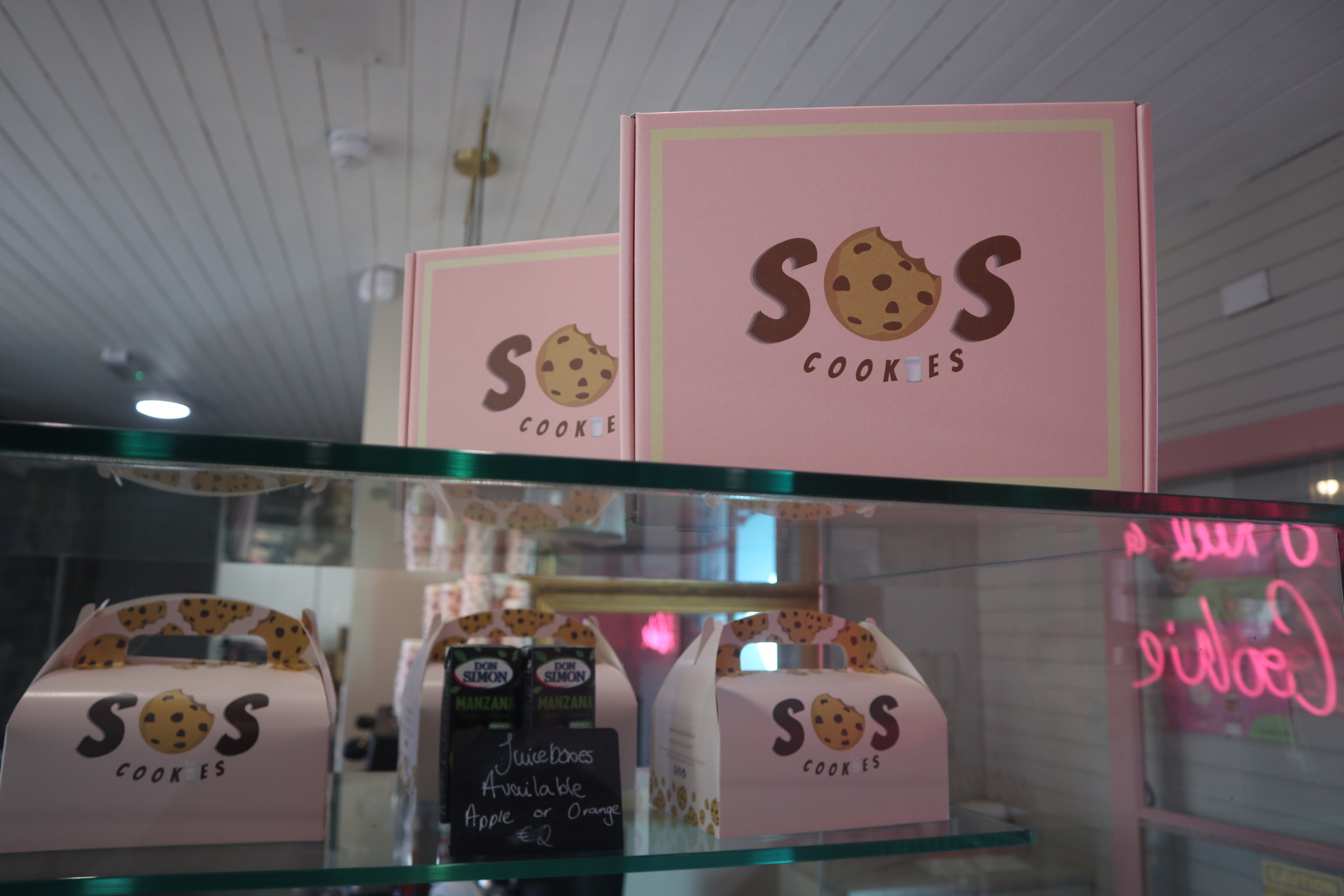
SOS Cookies, located in Limerick’s Milk Market, isn’t letting the cookie crumble when it comes to food waste; they are freezing, swapping, and trialling new flavours and ingredients to actively avoid it.
From reinventing leftover bread ends in their chicken toastie to tweaking recipes based on the weather, SOS Cookies is one of many businesses tackling global food waste.
Odile Le Bolloch, scientific officer at the Environmental Protection Agency (EPA), explains that “with smaller businesses, you recognise the opportunity there is in reducing food waste.”
Cara O’Brien, supervisor at SOS Cookies, explains how their cookies have a five-day shelf life when stored correctly, saving baked goods from being unnecessarily discarded.
Like the small but impactful changes that SOS Cookies is making, Ms. Bolloch says that businesses need to work at preventing food waste from the get-go rather than trying to manage it.
Food waste is a worrying issue not just in Ireland, but around the world, so much so that the United Nations has dedicated a Sustainable Development Goal to significantly reduce global food waste.
In line with SDG 12.3, Ireland must reduce food waste by 50% by the year 2030, “a magnitude that is underestimated,” says Ms. Bolloch.
“I think smaller independent businesses have more to gain because food waste is actually a business cost. You’re wasting your bottom line – it is profits you are throwing away,” she explains.
Co-founders Dmytro Isakaytskti and Dmytro Posypaiko of Rise Coffee on Limerick’s Cruises Street are another example of a Limerick business trying to tackle food waste effectively.
The pair explains how they must be careful with the amount of treats they order for their coffee shop: “We trial things, and if they don’t work, we change it up and find something new.”
They also mention how they hope to start using Too Good to Go, a platform that allows restaurants and cafes to sell surplus food for a discounted price at the end of the day. They hope to begin using it in early March.
It is apparent, however, that it is an issue that all food sector businesses, no matter the scale need to prioritise.
According to the EPA, an estimated 835,000 tonnes of food waste were produced in Ireland in 2023, with 21 percent of this waste being generated by the restaurant and food service sector.
“You could make your lunch with things that are in the bins. When you see it, it really does open your eyes”, explains Ms. Bolloch in relation to food composition studies carried out by the EPA.
In response to this growing issue, the revised Food Waste Charter was expanded to include all businesses across the food supply chain in 2023. The Charter is a voluntary initiative led by the EPA that aims to help food sector businesses measure and reduce food waste.
By signing up to the charter, businesses pledge to measure their food waste, report it to the charter annually and take target-based actions to reduce waste.
Ms. Bolloch mentions how the charter has around 90 members from all sectors of the supply chain: “We have businesses with big sustainability departments and smaller independent businesses.”
A new directive by the EU, the Waste Framework Directive, requires Ireland to reduce food waste by a slightly more achievable 30 percent per capita in retail, distribution, restaurants, food services and households by 2030.
Ms. Bolloch emphasises how “now is the time for businesses to start getting on board, measuring and reducing their food waste.”
The scientific officer explains how the charter gives businesses a chance to see what works for them and is not as restrictive as a piece of legislation which could be considered if numbers do not start declining.
It is abundantly clear that the food sector needs to shake up its efforts to become more sustainable. Ms. Bolloch says that “we are all in a bit of denial of what we waste, and it is only when you see the cold, hard figures that you believe it.”
She concludes with how customers are demanding that businesses become more sustainable, “they want to deal with businesses that are ethical.”