

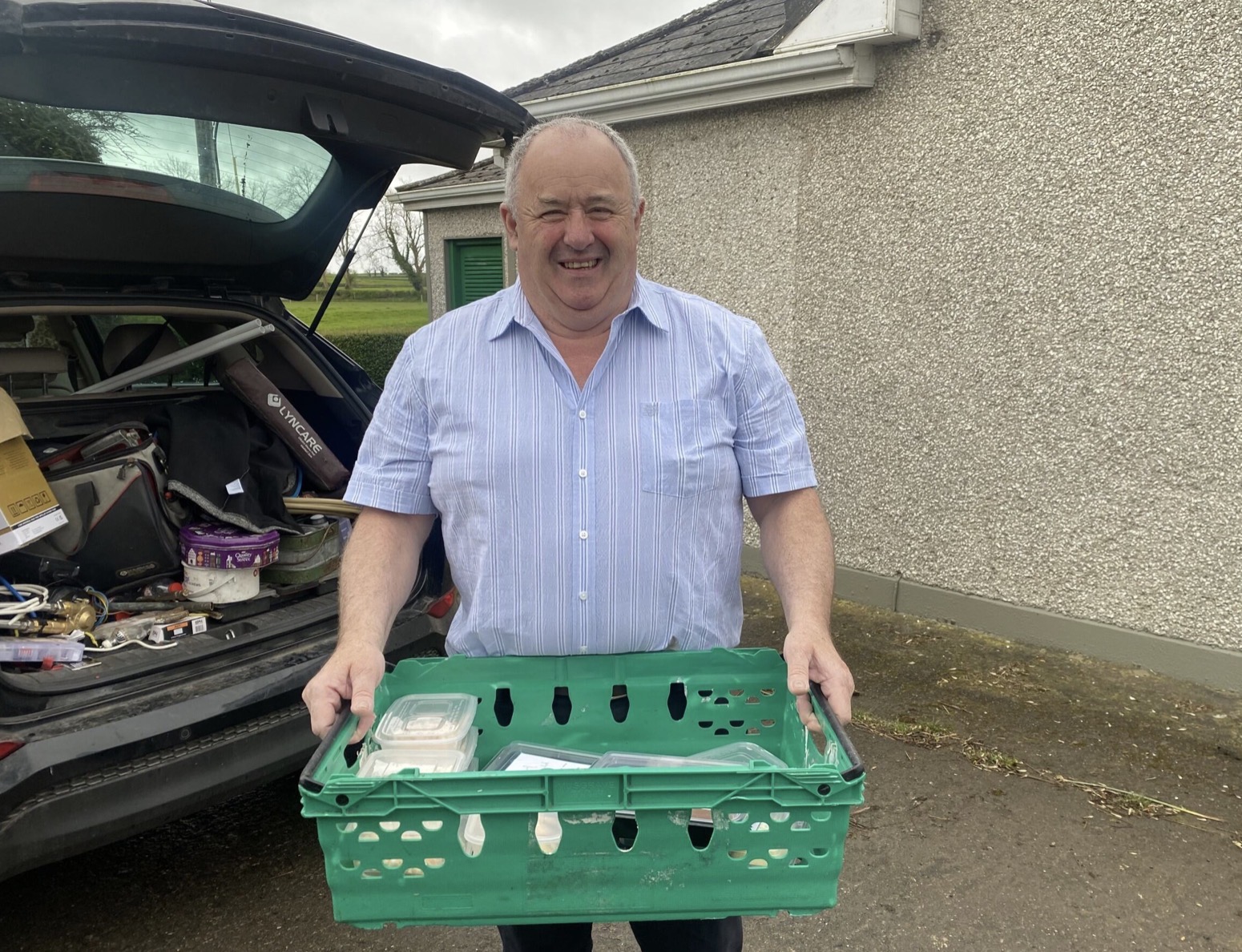
Residents of the village of Croom in Co Limerick are giving back to the elderly in their local community through the provision of the Meals on Wheels service.
The National Meals on Wheels Network is a voluntary organisation made up of over 300 local service providers nationwide, delivering hearty meals and home comforts to pensioners across the island.
Despite ongoing challenges around lack of funding and rising fuel costs, it continues to thrive.
Limerick Voice reporters Saul Mezzapelle and Christian Rosenberg shadowed Croom volunteer John Cronan on his delivery route to discover more about the service.
The first thing that struck us was the deeply personal nature of the service. John and all the other volunteers we met seemed to have a real passion for the work, something that was embodied in how much care and attention John gave to everyone he delivered to.
From the local paper, to recent hospital appointments, and grandchildren, there wasn’t a topic that went undisscussed as we stayed for a chat in the majority of homes.
“It’s as much about that personal connection as it is actually delivering the meals,” John explains during a drive between deliveries.
“You could do it in an hour and a half if you wanted, but where’s the fun in that? You’d lose the personal touch, and that’s so important to these people.”
That personal touch was evident as soon as we entered into the homes of those on the route. Faces lit up as we came through the doors and one woman gave out hugs and apple juice as sweet and warm as each other.
Another man we visited was living with Alzheimer’s disease in a rural area with home help, but had been without power all morning. The Meals on Wheels visit at 1pm allowed him to have his first meal of the day.
“If the support wasn’t there, a lot of these people would be in care, in nursing homes and for a lot of them, there’s no need” John explains.
The service allows this man and countless others to retain their independence and remain living at home.
John was able to tell us all about every single customer before we met them; who they were, what they did before they retired, who their family members were, their likes and dislikes.
“People were good to my mother before she died” he says after being asked why he started volunteering with the service a year and a half ago.“After I retired, this was my way of giving back.”
That attention to detail could also be seen in how the meals were personalised to cater to individual tastes; an extra scoop of mash for one gentlemen and gravy on the side rather than on top for another woman.
The quality of the meals was also commendable. Traditional Irish comfort foods like beef stew, bacon and cabbage, and roast chicken were on offer, specifically designed to cater to the customer’s palettes.
After about three hours and a 57 kilometre round trip, we returned to the Family Resource Centre in Croom from where the service operates to learn more about the organisation.
We spoke to Sandra Gardiner, Administrator of the Croom Meals on Wheels division, who opened up about some of the challenges facing the service.
“I guess the big concern now would be the price of petrol and diesel” she admits. The service has one delivery van, but for the most part, volunteers like John deliver the meals in their own cars and pay for their own fuel.
“Right up to last week, none of our volunteers really minded but it would be a big concern now.”
It’s not just Croom feeling the pinch. A survey from the National Meals on Wheels Network in late March showed that 86% of service providers nationally are feeling the effects of rising fuel costs in the midst of the ongoing war between Iran and Israel.
Sandra says the group has applied for funding for a second delivery vehicle which is sorely needed. “Our rural routes would be at least a 60 kilometre round trip so hopefully we’ll be able to offer that to our volunteers and we won’t have to put that expense on them.”
You would be forgiven for thinking that funding for such a vital organisation is guaranteed, but as we discovered when we spoke to the Manager of Croom Family Resource Centre Eibhlis Bray, that’s not exactly the case.
“We’ve only just secured funding in the last couple of months, and the funding we’ve secured is very, very small. We’ve received €40,000 from the HSE to support the service, which sounds like a lot of money but at the moment, we’re running it at a loss.”
“If you look at most of the funding we get, it doesn’t cover light, heat, transport costs, etcetera. That €40,000 is only just keeping us out of the red.”
Part of the reason why operating costs are so high is because the service has to buy the meals externally. A commercial kitchen is under construction at Croom Family Resource Centre thanks to a funding initiative from the Department of Rural and Community Development and the Gaeltacht.
This will allow them to make the dinners in house, lowering costs. But for now, they have to buy them from a catering company and sell them at a loss.
“We’re selling our meals at the moment at seven euros, but we’re actually paying close to ten euros per meal” Eibhlis tells us.
She admits she’s worried about Meals on Wheels providers potentially being forced to raise the price of the meals as a result of low funding and high fuel costs, but emphasises that this is the last thing the service wants to do.
“I’d imagine across the country there will be a shift towards a higher price, especially those that are operating big fleets of cars at the moment, and particularly rural services.
“We’re lucky we’ve got volunteers here. Most services have got to pay somebody to deliver the meal, and they’ve got a fleet of vans that they have to fill the tank of and insure, and a lot of state funding ignores these realities.”
The March survey showed that 41% of providers have considered increasing the price of meals.
National Meals on Wheels Development Officer Tracey Noone highlights the impact this would have on providers like Croom.
“In terms of increasing the cost of the meal, it’s the very, very last thing that the Meals on Wheels provider wants to do, because they are delivering a service to elderly and vulnerable people in their community, so they really don’t want to pass on that cost.”
Tracey also highlights providers concerns of a potential drop off in volunteers due to costs.
“They’re really, really worried now that volunteers are going to drop off because they can’t afford to put diesel or petrol in their cars to deliver the meals.”
Eibhlis shared these concerns last week, but highlights how the spirit, perseverance and inherent goodness of the Croom cohort have allowed them to keep going despite the current challenges.
“Not a single one of them have mentioned it right during this whole thing. But realistically, at the weekend, I was thinking, ‘Should I reach out to the volunteers and see, do they want to pull out?’ Because it’s a huge deal for them.
“They’re so good. Half their day and half their tank is gone doing this. It’s so selfless.”
In 2025, HSE funded Meals on Wheels services delivered nearly 2.8 million meals to 228,000 people nationally according to Tracey.
But not every Meals on Wheels service is HSE funded, and there is no way of knowing how many deliveries were made by these services.
What we do know is that this is an essential service being run by selfless volunteers who go out of their way to give back at great cost to themselves while asking for nothing in return.
For a lot of customers, the only social interaction they’ll have in a day, or even week will be their Meals on Wheels delivery.
Regarding the future of the organisation, Tracey tells us that the National Meals on Wheels Network recently held ‘productive’ talks with Minister of State for Older People and Housing, Kieran O’Donnell about securing more funding for the service helping thousands across the country.