

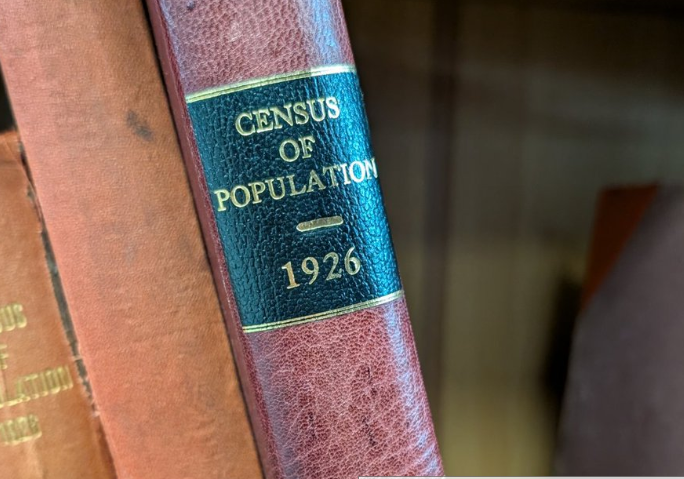
The release of the 1926 Census has allowed historians and curious citizens alike to delve into a hidden past.
According to John Gibney, a Royal Irish Academy Historian who worked on the project, the release challenges the image of the early Free State as a dreary backwater, sealed from the rest of the world and squarely monocultural.
Thanks to the ostensible 100-year rule, the census legally had to be made public. This time, however, the digitised platform is entirely free.
The census, which covered about 2.9 million people across hundreds of thousands of pages, shows a time in Ireland that was still overwhelmingly Irish-born Catholic, but less socially flat than our cultural recollection might give Ireland credit for.
Limerick itself enters the national story by way of the Shannon Scheme, when Siemens workers arrived from Germany. For once, the wild geese were flying in.
To take a closer look into Limerick’s pre-1926 census history, and to see if the newspaper archives would echo a similar tune, we indexed 420 newspaper documents adding up to 53,000 text chunks between 1900 and 1915.
By mapping documents into AI embedding space (its ‘mental’ map), we grouped pages by their semantic tone: civic, commercial, religious, nationalist, literary, bureaucratic and ordinary everyday print.
Broken down this way, the archive reveals which publications pushed which agendas and how the media evolved over time in response to a rapidly changing Ireland.
We found that the introduction of publications like The Spark, a short-lived nationalist paper, introduced a massive radical signal, where publications like the Weekly Observer did the opposite, representing Unionist and Protestant anxieties.
From the available archives, this started to bloom around 1915 as the discourse polarised in favour of nationalism.
Taking a dive into the rhetoric relating to Protestantism specifically, we mapped the semantic contexts where the label was invoked over time. Scholars are optimistic that the census will shed light on enigmas like the Protestant decline, where, from 1911 to 1926, the future Irish republic lost 32 per cent of its non-Catholic population.
Unionist anxiety, nationalist accusation, or generally violent or polemic texts remained steady throughout the 15-year period while religious grievance seemed to increase considerably.
These arguments over institutional anxiety, fairness, intolerance, Orangeism, Catholic Injury, and local legitimacy all indicate a growing vocabulary of nationalist grievance. They show a local press where bubbly advertisements and mundane PSAs are printed among a growing vocabulary of grievance.
The 1926 Census is valuable because it can reveal the past on a level of detail and honesty that can sometimes force us to confront our beliefs about the past. Newspapers, however, show how imperial backlash became public; how it was defended, ignored, or institutionalised.
Below is the system itself, where readers can navigate the archives yourself and examine the mapped clusters as they evolve.
Generative text models were used in the creation and implementation of the archive: