

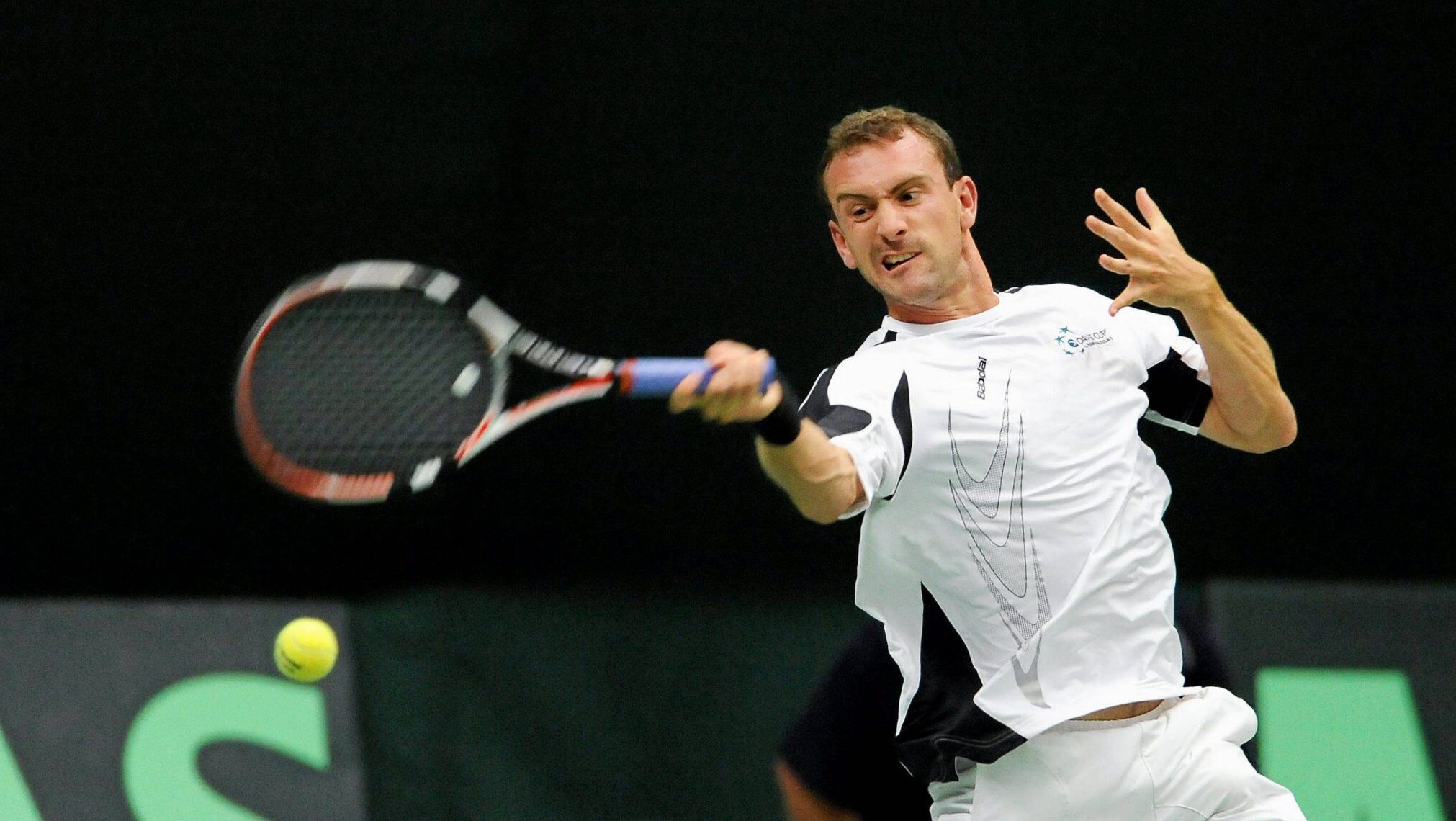
129. It seems like just a number, right? Not in tennis, it’s not. In tennis your number is everything.
“I always felt it was a bit misunderstood”, said Conor Niland when reflecting on his career as an Irish tennis player.
“[While on tour] you’d come home and you’d meet someone, and you’re a guy in your late twenties and they’re asking you what you do. And you tell them with your Irish accent, you’re a professional tennis player. You’d get all sorts of strange reactions and [people are] not overly impressed generally,” he laughs.
Niland’s career as a journeyman tennis player brought him all over the world, from the glamour of the main draws at Wimbledon and the US Open to far less appealing Challenger and Futures events in Uzbekistan and Siberia.
He rubbed shoulders with the greats, beating Roger Federer in his junior career, as well as training with the likes of Andy Murray and the Williams’ sisters.
Despite this, the lack of tennis coverage in Ireland meant that Niland’s talent often went underappreciated.
“I lived with that and very much, it was a part of my life, that sort of explaining who you are and what you do and people not quite maybe grasping it. That was a big driver of writing the book, to be honest.”
In 2024, Niland released ‘The Racket.’ The book detailed his story, from when he was a young kid learning his trade at Limerick Lawn Tennis Club, to facing Novak Djokovic at the US Open (while suffering from food poisoning), and everything in between.
‘The Racket’ was an instant hit, winning the prestigious William Hill Sports Book of the Year award in 2024.
“I knew it was a really good book,” said Niland. I felt like it had an interesting perspective in that the story hadn’t been told of the guy who’s dipping his toe in the big time but telling you what the other side is like.”

The book is a refreshing insight into the world of professional tennis, from someone just on the cusp of the sport’s top table. It deals with everything, from the loneliness of the tour to the sports’ susceptibility to match-fixing.
Conor’s father Ray, a former Mayo Gaelic footballer, passed away in 2013, just months after his last appearance on a tennis court. He offered up the autobiography as a tribute to his father, who healthily pushed him throughout his career, and followed him around the world.
“No matter who you are as a tennis parent, there’s going to be moments where you use your temper or maybe apply a little bit too much [pressure]. I think being honest about that was important, but he was a brilliant, brilliant dad and support to me,” he said with a smile.
Life on tour isn’t a conventional one. Niland lived in hotels and airport lounges for much of his career. He mainly plied his trade on the Future and Challenger circuits, where he saw neither the fame nor fortune that one might associate with being a pro athlete.
As The Racket demonstrates, mental toughness is essential on tour, and Conor Niland is an expert.
“You can’t be getting too high or too low. I maintained a pretty even keel,” he said. “That’s a form of mental toughness.”
Even the very, very best guys are losing a lot of weeks. [Carlos] Alcaraz, [Jannik] Sinner, [Roger] Federer, and [Novak] Djokovic are winning the vast majority of the matches they play, but for the guys who aren’t Grand Slam winners, they’re losing. They might win two tournaments a year out of 30.”
Niland eventually achieved his lifelong goal of competing on the perfectly cut lawns of Wimbledon in 2011, a far cry from the grass courts on which he learned the nuances of the game in Limerick.
Now working in real estate, he remains involved with the sport as the non-playing captain for Ireland’s Davis Cup team.
His legacy lives on through ‘The Racket’, and that number, 129.