

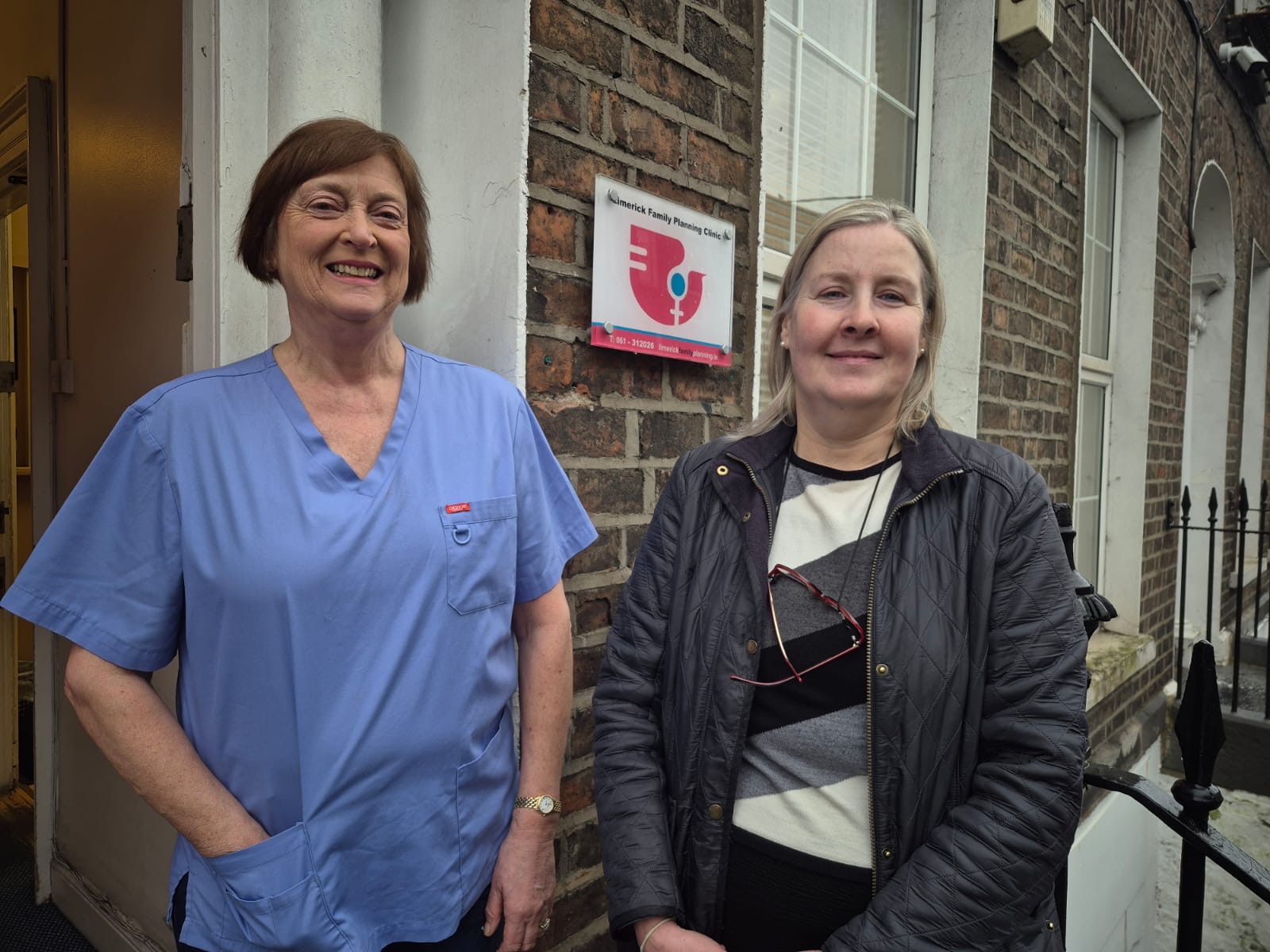
The pioneers of the Limerick Family Planning Clinic battled against Ireland’s repressive social climate in the 1970s, pushing for reproductive freedom at a time when contraception was illegal to buy and women had little autonomy over their own bodies.
Today, the practice at 27 Mallow Street stands as a respected institution, led by clinic manager Caroline Hayes. The team is currently composed of six doctors, four nurses, and four administrative staff.
“The phones never stop, it’s quite full on. We assist over 5,300 people per year, roughly 100 per week, but that can increase when we take smear tests into account.
“The nurses here are the experts, they are so efficient, that’s why people come to us.”
With over two decades of involvement with the clinic, Caroline’s passion for delivering top-class health care is evident from the private and professional atmosphere in the practice.
Speaking to clinical nurse Ann Ui Nuallain, she emphasises the clinic’s importance due to the large catchment area: “Initially you had a family planning clinic in Cork, one in Tralee, one in Newcastle West, but they’ve all closed down.”
“This large and diverse patient group means every day is full of variety, as Ann states; “We’ve got to learn as we go along and move with the times, but it’s certainly worth its weight in gold.”
The Free Contraception Scheme covers the full cost of consultations, prescriptions, and long-acting reversible contraceptives for individuals aged 17 to 36 in Ireland. The scheme covers GP consultations, prescriptions for various methods (pill, patch, ring), and the fitting/removal of Long-Acting Reversible Contraception (LARCs) like coils and implants. Emergency contraception is also free.
Anyone is eligible to avail of sexual health screenings at Limerick Family Planning, regardless of medical insurance. Swabs, blood, and urine samples are taken depending on gender; they’re then lab tested.
“A lot of people are under the assumption that young people are careless and carefree, but that is not the case. I have seen young couples starting relationships and coming here for screening. Just to be sure, to be safe. They’re very sensible,” says Ann.
Patient confidentiality is of the utmost importance at Limerick Family Planning.
Caroline explains, “We tell patients to ring in for their results always. All the post or documents come up in the morning to get checked and signed. If it does not have a signature, it cannot be scanned. The doctor reviews everything, we have a good fail-safe system.”
Contraception is the service most availed of, particularly coil fittings.
Ann recalls, “Years ago, the only women getting Mirena coils fitted were in their mid to late 40’s, they had either finished their families or suffered from heavy bleeding. Now 17- or 18-year-olds, who have not had any babies, but may miss school due to periods are opting for the Mirena coil.
“Once implanted into the uterus, it can stay for eight years. It’s fantastic, it brings them through school, college, or even the trip to Australia.”
In terms of support from the public, the reception is positive, however there is always an opposition. The experienced nurse remembers when she first started in 2006 there were religious protesters lingering on Mallow Street, praying for those inside: “They would come here in the morning and go to the maternity hospital in the afternoon;they wore pink sweatshirts with the picture of a fetus.”
“People coming here may be anxious; they may have an unwanted pregnancy. This intimidation we saw was just bullying of the highest order.”
Fortunately, the 2024 Safe Access legislation established a 100-metre safe access zone around healthcare facilities providing termination services in Ireland. It is now a criminal offence to protest, influence, or impede access.
In 2025 the clinic celebrated 50 years since its inception in 1976, a momentous occasion that was celebrated in Limerick’s Millenium Theatre and organised by clinic director, Dr. Sarah Anne Bennett.
Central to the event was the screening of a short film documenting the clinic’s history, charting both its progress and early challenges of breaking taboos. Reflecting on different times in society, executive board member Cam O’Donoghue remembers women choosing to have their coil removed in 1979 as the Pope made his visit to Limerick, a true reflection on how far society has since come.
Looking ahead for the future, Caroline is sending a proposal to the HSE for a more accessible building. The current practice does not have lift services, or adequate waiting room space for those who have no choice but to bring children to appointments.
The team’s work has had a lasting impact on healthcare outcomes across the Mid-West, with another promising 50 years likely for the Limerick Family Planning Clinic.