

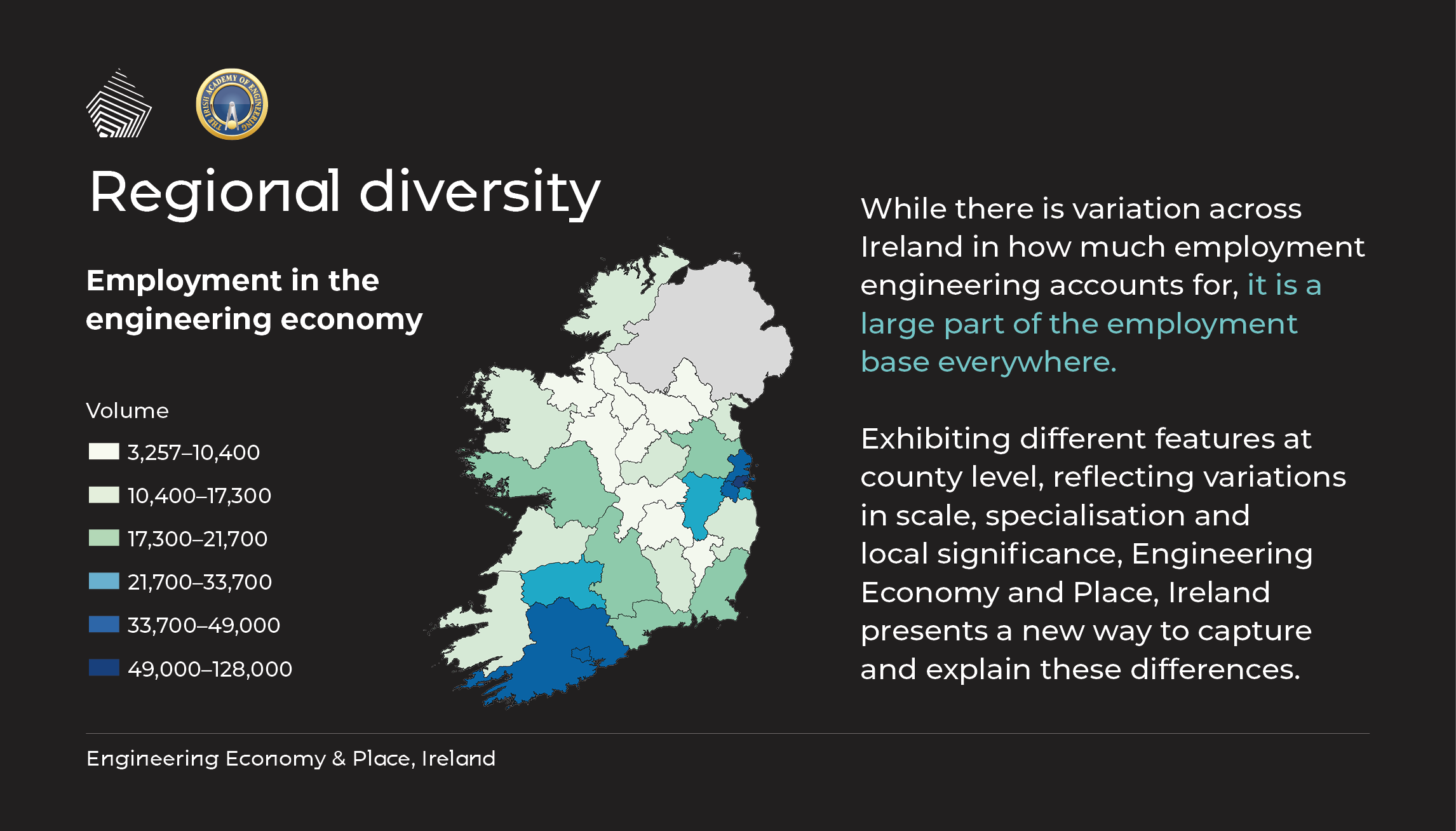
Limerick City has been identified as an “Engineering Powerhouse” according to a new report. The Engineering Economy and Place – Ireland report was produced by the Royal Academy of Engineering UK and Metro Dynamics and was funded by InterTradeIreland. It is “the first comprehensive place-based analysis of the engineering economy in the Republic of Ireland.”
The report mapped the country based on the engineering sector present in the area, with Limerick, Kildare, Meath and Cork city and county coined as ‘Powerhouses’ in the nation. It highlights the work done in the Shannon Free Zone, which houses firms active in the fields of precision engineering, medical technology, digital technology and aerospace. The powerhouses of engineering host 10,400 businesses that employ over 180,000. The mean annual earnings were reported as €52,500 across the engineering field in these regions.
Minister for Public Expenditure, Infrastructure, Public Service Reform and Digitalisation, Jack Chambers, shared the importance of the report in “better [understanding] our nation’s engineering strengths and how best to support the sector to meet our shared goals.”
Nationwide figures show a similar upward trend. From 2011 to 2022, engineering employment grew by 44%, compared to a 29% increase in total employment in Ireland.
Sean Finlay FIAE, President of the Irish Academy of Engineering, said: “There has long been a consensus in Ireland that engineering is integral to its economy. Developing and deploying the Engineering Economy and Place approach has allowed us to not only demonstrate that engineering plays a far greater role in Ireland’s economy than captured by more traditional analyses; but also takes a much more granular view of the role of engineering in the place-specific contexts of the 31 administrative counties.”