

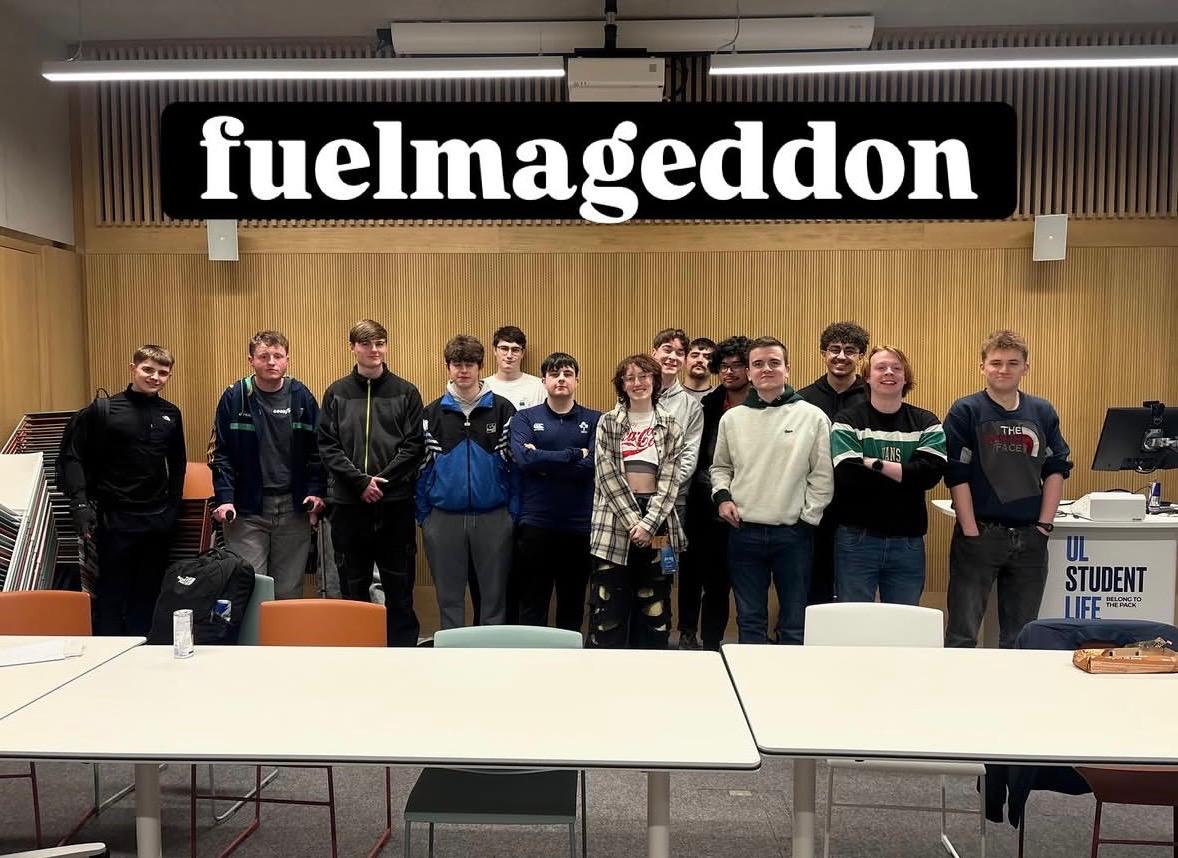
The effects of ongoing tensions in Iran are beginning to reach students in Limerick, with one college society describing the situation as “fuelmageddon.”
UL Politics Society met this week to discuss the implications of the international conflict.
Society member Kye Earle said the group examined “how the war in Iran, the European Union’s response to that, and the Irish government has led people to take such drastic action in blocking the motorways, blocking the ports and all the petrol stations running out of fuel.”
On prospects for peace, Earle was cautious, saying a realistic lasting deal would be “very difficult” to achieve. She identified a ceasefire and the reopening of the Strait of Hormuz as the most critical first step.
This comes as the ongoing US-Israel conflict in Iran enters its 46th day, with a US naval blockade of the Strait of Hormuz sending fuel prices soaring globally.
Ellen Kelly, a student at the University of Limerick, said the crisis is hitting her pocket in a very real way.
“All I know is that because of the Iran conflict, the sale and distribution of fuel is being negatively affected…now it’s costing around an extra €20 to fill my tank which is a lot of money for a college student,” she said.
Ms Kelly’s frustration reflects a larger concern. Fuel prices continue to climb with no clear end in sight. US Energy Secretary Chris Wright warned that oil prices will “likely climb” until meaningful ship traffic gets through the blockaded Strait of Hormuz, adding that elevated prices could persist well into the end of 2026.
The conflict, code-named Operation Epic Fury, was launched on February 28, 2026, when the United States and Israel initiated joint military strikes on Iran, killing Supreme Leader Ali Khamenei and triggering a wave of retaliatory missile and drone strikes across the Middle East.
The war has left thousands dead across Iran, Lebanon, Israel, and the Gulf Arab states, and has displaced millions across the region. Now, weeks later, the economic shockwaves are being felt far beyond the Middle East, including in Ireland.
Around 20,000 vessels are reported stranded, with global supply chains, including fuel and fertiliser, under severe strain following disruption to shipping through the Strait of Hormuz.
A temporary two-week ceasefire agreed between the US and Iran appeared to offer some relief, but weekend peace talks in Islamabad broke down after 21 hours of negotiations, with delegations failing to reach an agreement.
US President Donald Trump hinted on CNN this Tuesday, April 14, that further talks towards a permanent end to the conflict could resume in Pakistan “over the next two days”, while UN Secretary General António Guterres said it is “highly probable” that peace negotiations will restart.
For students like Kye Earle and Ellen Kelly, the hope is that those talks lead somewhere quickly, before another trip to the forecourt takes an even bigger chunk out of an already-stretched college budget.